
The Truth About Wig Costs: Why Quality Matters
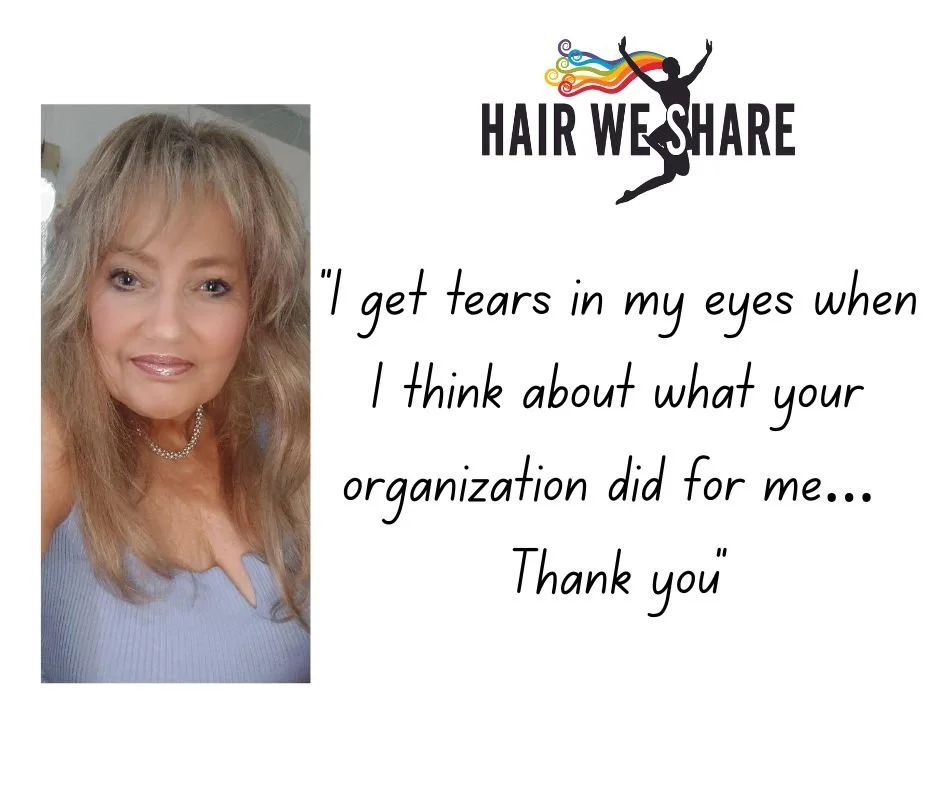
Every wig we create begins with hope.
A deeper dive into why medical wigs are expensive, what makes a high‑quality wig, and why free wigs still require funding.
The Reality Behind a “Free” Wig
When someone is facing chemotherapy, alopecia, trichotillomania, or another medical condition that causes hair loss, a wig isn’t a luxury — it’s a lifeline. It restores confidence, dignity, and a sense of self at a time when everything feels out of control.
But here’s the part most people never see: A free wig is never free to make. And the difference between a low‑quality wig and a medical‑quality one is enormous.
This blog pulls back the curtain on what it really takes to create a wig worthy of someone going through the hardest moment of their life.
• Processing Donated Hair
Every ponytail we receive costs $150 to process. A single wig requires 5–9 ponytails, depending on length and density.
That means $750–$1,350 is invested from the moment we receive the donated hair until the finished wig is delivered to its recipient.
• Skilled Labor
Medical wigs are hand‑tied, strand by strand, by trained artisans. This labor alone takes 40–60 hours per wig.

Each ponytail is a gift — and each one begins a long, careful journey.
• High‑Quality Materials
A medical wig requires:
A breathable, soft, irritation‑free cap
Lace for a natural scalp appearance
Secure but gentle construction for sensitive skin
• Professional Manufacturing
Hair We Share partners with a professional factory to ensure consistency, durability, and medical‑grade quality.
How Donated Hair Is Prepared
(Factory Processing)
Before donated hair can ever be sewn into a wig, it must go through a meticulous, highly skilled preparation process at our partner factory. This step is essential — it ensures the hair will behave naturally, last a long time, and never tangle or matte on the recipient.
1. Sorting and Alignment (Cuticle Check)
Human hair has a natural direction — root to tip — and if even a small percentage of strands are reversed, the wig will tangle severely. To prevent this, every bundle goes through:
Cuticle Alignment: Ensuring all strands face the same direction.
Float Test / Rub Test: Technicians feel which end is the natural tip and which is the cut end.
Root‑Up / Root‑Down Sorting: Hairs are separated and reorganized into one perfectly aligned bundle.
2. Hackling (Detangling, Blending, and Removing Weak Hairs)
Once aligned, the hair is drawn through a tool called a hackle — a heavy board lined with sharp metal spikes.
Hackling:
Removes short hairs under 3 inches
Detangles and smooths the bundle
Blends different textures and colors
Ensures natural movement and fullness
Breaks off weak or damaged hairs that would shed from the finished wig
This last part is important: Weak hairs snap off during hackling, which means only the strongest, healthiest strands make it into a medical‑quality wig.
When you see a “human hair wig” being sold cheaply online, it is often made from the weaker hairs that broke off during processing — the same hairs that cannot withstand sewing, washing, or daily wear. That’s why those wigs shed quickly and don’t last.
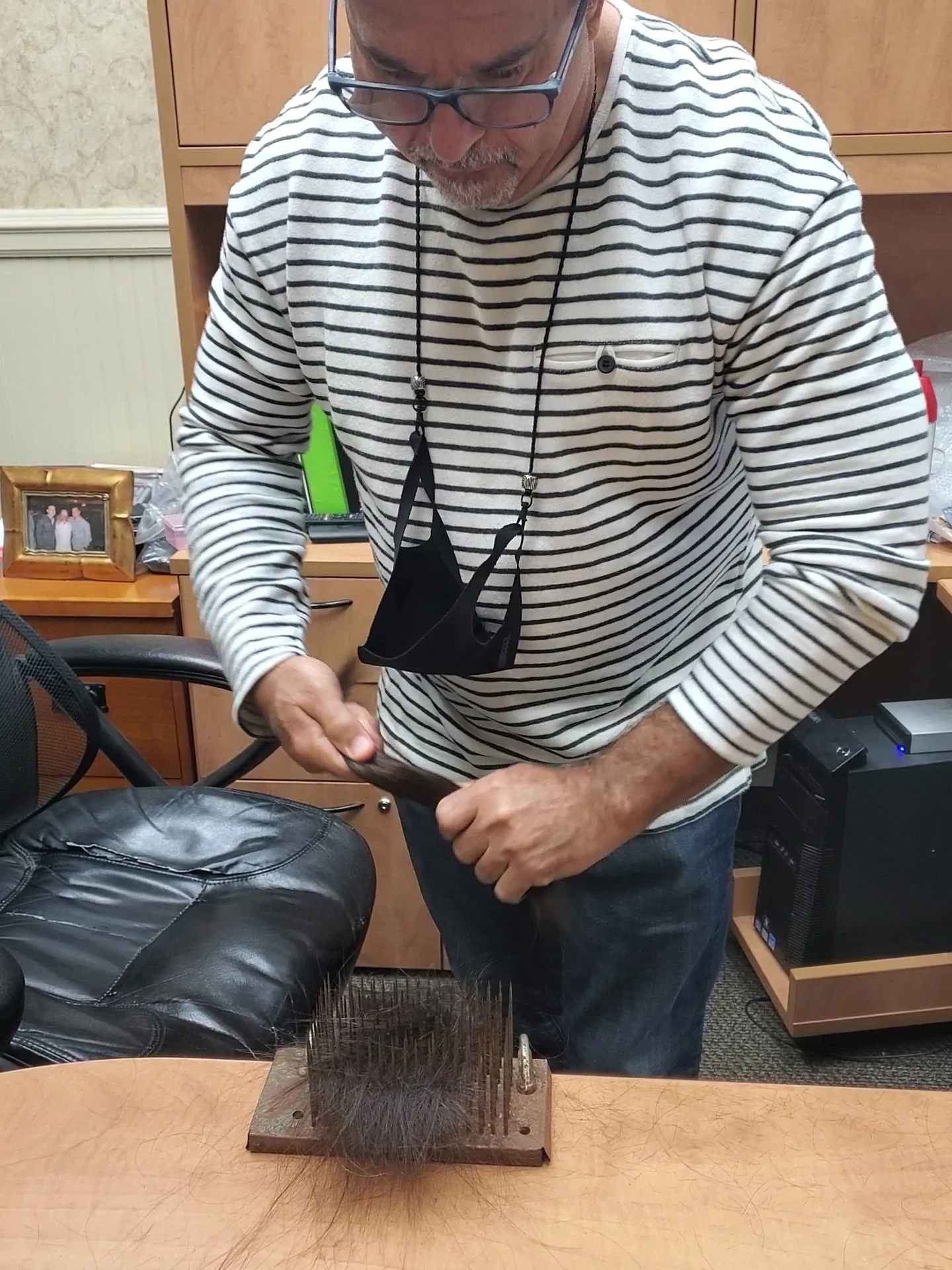
Hackling blends, smooths, and removes weaker hairs so only the strongest remain
3. Measuring and Bundling
After hackling, the hair is:
Weighed to determine density
Secured tightly in the middle
Trimmed so the top edge is perfectly even
These bundles become the building blocks of the wig.
4. Washing, Sanitization, and Customization
Every bundle is thoroughly cleaned and sanitized to ensure it is safe for someone with a medically sensitive scalp.
This includes:
Deep washing
Disinfection
Delousing if needed
Tressing (weaving hair into fine wefts for sewing)
By the end of this stage, the hair is fully prepared for the next step: wig construction.
5. Cap Construction (Creating the Foundation of the Wig)
Once the hair is fully prepared, the next step is building the wig’s foundation — the cap. This is where comfort truly begins. The cap must be soft, breathable, and gentle on sensitive scalps, and it’s carefully shaped so it fits securely without irritation.
At Hair We Share, we make four cap sizes — XS, S, M, and L — because every head is different, and a medical wig should feel like it was made just for you. A well‑constructed cap is what allows the finished wig to feel natural, stay in place, and be worn with confidence every day.
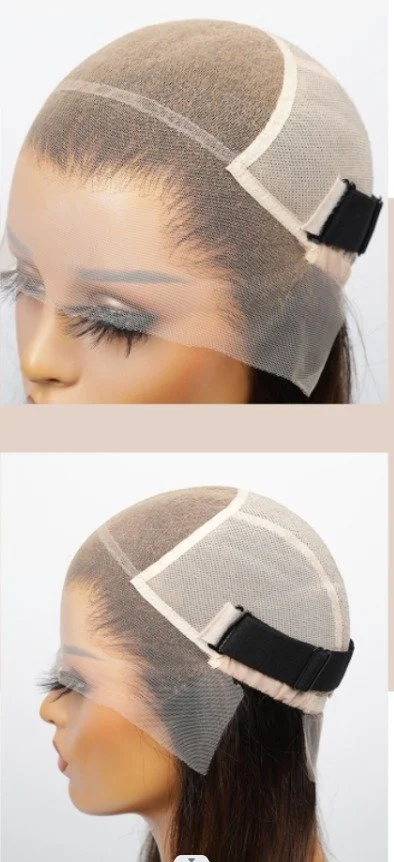
A natural hairline and soft, breathable cap make all the difference.
What Makes a High‑Quality Wig
Not all wigs are created equal — and when someone is medically vulnerable, quality matters more than ever.
• Natural Movement
High‑quality wigs move like real hair because they are real hair — and because each strand is tied to mimic natural growth patterns.
• Comfort for Sensitive Scalps
Medical wigs must be lightweight, breathable, soft, and non‑irritating.
• Realistic Hairlines
A good wig disappears into the wearer’s skin. A poor‑quality wig announces itself from across the room.
• Longevity
A medical‑quality wig can last 1–2 years with proper care. A low‑quality wig may last weeks.
Why Free Wigs Still Require Funding
Hair donations are beautiful — but they’re only the beginning.
Here’s the truth most people don’t know:
Without financial support, donated hair cannot become a finished wig.
Even with our careful cost‑saving measures, each wig requires:
Processing donated ponytails
Professional manufacturing
Skilled labor
High‑quality materials
Shipping and handling
Administrative support
The average all‑inclusive cost to produce a wig is $1,500.
We never charge recipients. We never want a family in crisis to choose between a wig and a medical bill.
That’s why sponsorships, donations, and community support are essential — they bridge the gap between generosity and impact.

Your support turns donated hair into a life‑changing gift.
Final Thoughts — Suzanne, Co‑Founder of Hair We Share
A wig is more than hair. It’s confidence. It’s identity. It’s hope.
When you understand what goes into creating a medical‑quality wig, the cost makes sense — because the value is immeasurable.
By supporting organizations like Hair We Share, you’re not just funding a wig. You’re restoring dignity to someone who desperately needs it.
Conclusion: Quality Isn’t Optional — It’s Compassion in Action

A quiet moment that changes everything — the first time she sees herself again. And every time I get to be part of that moment, especially at no cost to the recipient, I’m reminded why I love what I do.